
Excellent treatment for root canal, I have taken my wife here to check her tooth. Dr. Jayaprakash thoroughly explained procedure clearly and every step was executed by himself and perfectly…
Digital Full Mouth Rehabilitation in Perambur, Chennai Full Mouth Rehabilitation
We don’t just restore teeth. We analyse how your teeth meet, share forces and function together.
-
Intraoral
Scanning -
Exocad
Planning -
T-Scan Bite
Analysis -
CAD/CAM
Restorations
- 20+ Years of Dental Experience
- 500+ Dental Implants Placed
- T-Scan Digital Bite Analysis
- Intraoral Scanning & Exocad Planning
- Flexible EMI Options Available
Several Treatments, One Plan
Full mouth rehabilitation brings several treatments (crowns, bridges, veneers, root canal treatment and bite correction) into a single plan, for when teeth are worn, damaged or missing across the mouth. The aim is a bite that works comfortably and a smile you are happy with.
Crowns & Bridges
Tooth-coloured crowns and bridges that rebuild damaged or missing teeth.
Veneers
Thin facings bonded to the front teeth to change their shape and shade.
Root Canal Treatment
Treating an infected nerve so the natural tooth can be kept.
Smile Makeover
A combined plan that addresses appearance and function together.
Bite Correction
Restoring an even bite so the teeth meet and share load properly.
One visit
to assess the whole mouth
When a Full Mouth Plan Makes Sense
A full mouth assessment is worth booking if several of these apply at once.
- Teeth that are worn down, chipped or cracked across the mouth
- Several large old fillings that keep breaking
- More than one missing tooth, or gaps that have been there a while
- Difficulty chewing comfortably on either side
- Teeth that have drifted, tilted or over-erupted into a gap
- A bite that feels uneven, or jaw and muscle aching
Beyond a Beautiful Smile, A Balanced Bite Matters
Are your teeth meeting evenly when you bite? In full mouth rehabilitation, restoring how the teeth look is only one part of the treatment. With T-Scan we also evaluate:
- Relative bite force distribution
- Timing of tooth contacts
- Left and right occlusal balance
- Dynamic contacts during jaw movements
Combined with digital intraoral scanning and Exocad restorative planning, this supports a more comprehensive approach to restorative dentistry. Clinical assessment determines whether digital occlusal analysis is appropriate for each patient.
Static vs Dynamic Occlusion
Where the teeth touch
Marks show which teeth make contact. Checking only the visible marks may not reveal the timing or the relative force of those contacts.
When, and how hard
A thin sensor records the order in which teeth meet and the relative force on each contact, while you bite and move your jaw.
We use both together. T-Scan complements the clinical examination, it does not replace it.
When We Use Digital Bite Analysis
Not every patient needs a T-Scan. We use it where a closer look at how the teeth meet supports the treatment plan.
Full Mouth Rehabilitation
Evaluating bite balance while the whole mouth is being rebuilt.
Multiple Crowns & Bridges
Assessing contact timing and relative force across several new restorations.
Implant Restorations
Evaluating how biting load falls on implant-supported teeth.
Worn-Down Teeth
A comprehensive bite and restorative assessment before worn teeth are rebuilt.
Complex Bite Problems
A dynamic evaluation of how the teeth meet as the jaw moves.
Occlusal Splint Patients
Checking the contacts on a night guard or splint while it is being adjusted.
We can show you photographs of comparable cases during your consultation. Every mouth is different, so what is achievable is discussed after the assessment.
Call +91 98402 03173Four Technologies, Planned Together
Each one complements the clinical examination and the restorative plan worked out by your dentist.
Intraoral Scanning
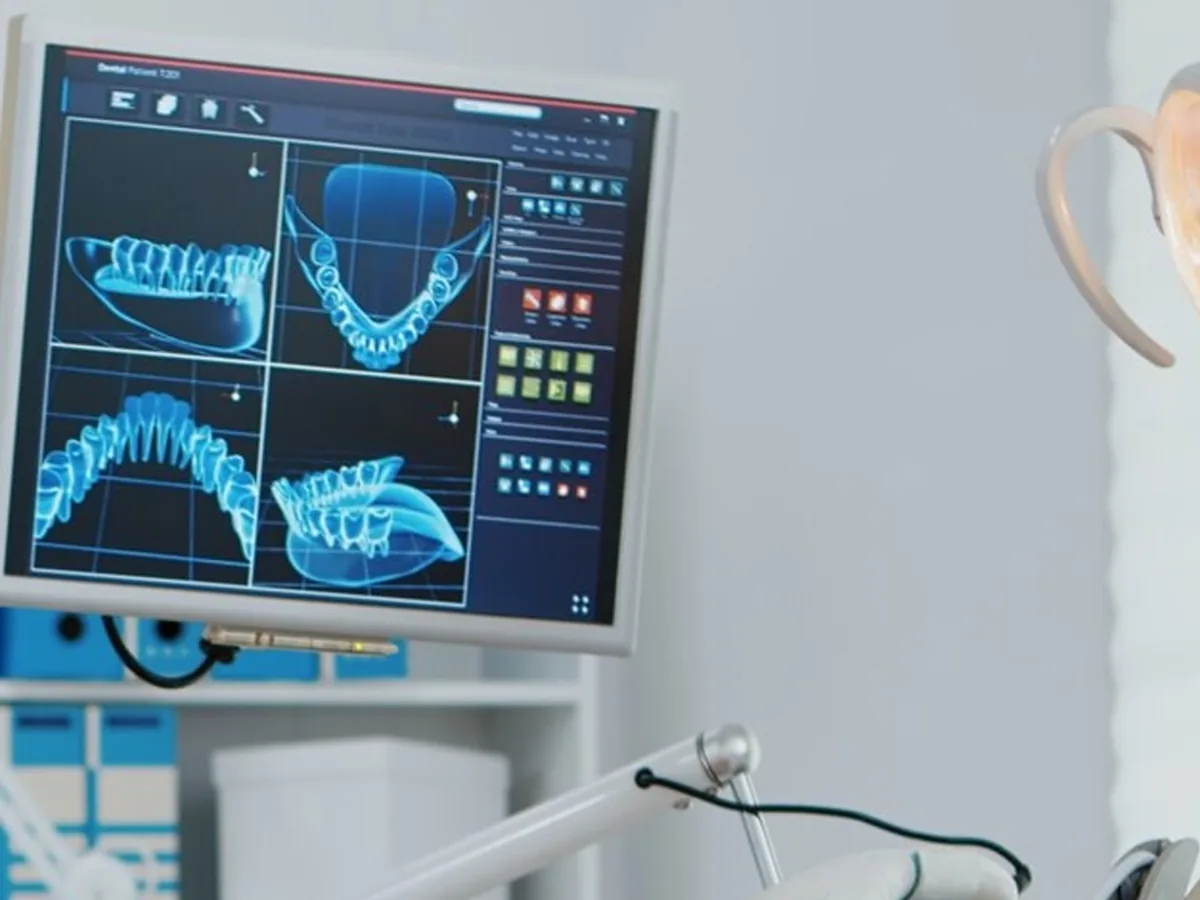
A digital impression of your teeth and bite, taken with a small handheld scanner instead of impression putty.
Exocad Planning
Crowns, bridges and implant teeth are designed digitally, so shape and fit are planned before anything is made.
T-Scan
Records the timing and relative force of tooth contacts as you bite and move your jaw.
CAD/CAM Restorations
Crowns and bridges precision-manufactured from the digital design, for a consistent fit.
How the Plan Comes Together
No surprises. You see the whole sequence before the first tooth is touched. The order is set for each patient, according to diagnosis and clinical requirements.
-
01
Examination & Photographs
Teeth, gums, bone and the bite are examined together, with clinical photographs and full-mouth X-rays.
-
02
Digital Intraoral Scan
A digital impression of both jaws and the bite, taken with an intraoral scanner.
-
03
Bite Assessment
Contacts are checked clinically with articulating paper and shimstock.
-
04
T-Scan Occlusal Analysis
The timing and relative force of tooth contacts are recorded as you bite and move your jaw.
Where indicated -
05
Exocad Restorative Planning
The restorations are designed digitally and the stages are set out before anything starts.
-
06
Provisional Restorations
Temporary teeth let us evaluate the bite, comfort and appearance before the final work is made.
-
07
Final Restorations & Bite Check
The final restorations are fitted and the bite is verified and adjusted.
Why Choose Us for Complex Work
Rebuilding a whole mouth is a sequence of decisions. Getting the order right matters as much as the work itself.
- The whole mouth and the bite assessed together, not one tooth at a time
- Intraoral scanning, Exocad planning and T-Scan bite analysis
- Full-mouth OPG and X-rays taken on site, so diagnosis is one visit
- The sequence and each stage explained before anything starts
- Provisional teeth evaluated before the final restorations are made
- The bite verified again when the final restorations are fitted
Full Mouth Rehabilitation FAQs
If your question is not here, call us on +91 98402 03173 and we will answer it.
What does full mouth rehabilitation actually mean?
It is a plan rather than a single procedure. Crowns, bridges, veneers, root canal treatment and bite correction are combined into one sequence when teeth are worn, damaged or missing across the mouth, so the work is planned together instead of tooth by tooth.
What is T-Scan digital occlusal analysis?
T-Scan is a digital bite analysis system. You bite on a thin sensor, and it records the order in which your teeth meet and the relative force on each contact, both when you close and as you move your jaw.
How is T-Scan different from checking the bite with paper?
Articulating paper and shimstock show where the teeth touch. T-Scan adds when each contact happens and how the relative force is shared between them. We use both together: T-Scan complements the clinical examination, it does not replace it.
Does every patient need a T-Scan?
No. It is used where clinically indicated, for example in full mouth rehabilitation, multiple crowns or bridges, implant restorations, worn teeth, complex bite problems and occlusal splint adjustment. Your examination decides whether it will add useful information in your case.
Is the T-Scan uncomfortable?
No. It is non-invasive: you bite on a thin sensor for a few seconds while the recording is made.
Can a T-Scan guarantee my crowns or implants will not fail?
No test can guarantee that. T-Scan gives your dentist more information about how bite forces are shared, which supports the planning and adjustment of your restorations alongside the clinical examination.
Will it all be done in one visit?
No. It is staged treatment, and the number of visits depends on how much needs rebuilding. We give you the sequence and the timeline at the planning stage rather than a standard figure.
Will the teeth look natural?
Modern ceramic and zirconia crowns are shade-matched to your surrounding teeth. In most cases it is difficult to tell which tooth has been restored.
What is the difference between a crown and a bridge?
A crown caps a single damaged tooth. A bridge replaces a missing tooth by joining to the teeth on either side of the gap, so it spans across.
Do I need a crown after root canal treatment?
Usually yes, particularly on back teeth. A root-treated tooth has lost its blood supply and becomes brittle, so a crown protects it from cracking under chewing.
Is a bridge better than an implant?
Neither is automatically better. It depends on the bone available, the health of the neighbouring teeth and your circumstances. We will talk you through both rather than push one.
How do I look after the work afterwards?
Brush normally and clean carefully around the edges and under a bridge. That is where problems start. Regular check-ups let us spot any issue early.
What Our Patients Say
Using a composite restoration, he restored my tooth so naturally that it looks just like a real tooth. I am very happy with the results, and he gave me back my confident smile.
My mother had a total of 6 implants placed, and surprisingly the entire procedure was done without pain. She was very comfortable throughout the surgery, which shows the high level of skill…
Book a Comprehensive Full Mouth Assessment
One appointment to look at your teeth, gums and bite together, and a plan you can decide on afterwards. We will tell you whether digital occlusal analysis is useful in your case.
Call / WhatsApp +91 98402 03173Visit Our Clinic
New No. 66 (1st Floor), Perambur High Road,
Jamalia, Perambur, Chennai – 600012
Mon to Sat 08:00 - 20:00
Get DirectionsTalk to Us Directly
No forms to fill in. Call us or send a WhatsApp message. We will answer your questions and fix a time that suits you.
Mon to Sat 08:00 - 20:00